
The Aichi-Nagoya Asian Games are grappling with significant accommodation issues, including male and female athletes being allocated shared rooms and long waiting times for credential activation, forcing even the host Japan team to seek alternative arrangements.

Japanese Olympic Committee chief Seiko Hashimoto acknowledged "many problems" at the Aichi-Nagoya Asian Games, particularly regarding accommodation, but emphasized that criticism doesn't reflect the full experience. She highlighted innovative solutions like cruise ship lodging as potential models for future cost-effective international competitions and stressed the importance of learning from challenges, including weather disruptions. Hashimoto also celebrated Japan's record medal haul at the Games.

India's deputy chef-de-mission, A Sharath Kamal, has downplayed concerns regarding the unique container room and cruise ship accommodation for athletes at the upcoming Asian Games in Aichi-Nagoya. He stated that Indian athletes have been prepared for these arrangements through mock setups at SAI centres. Kamal also expressed confidence in India's table tennis team, predicting at least one medal, specifically highlighting the men's doubles and mixed doubles pairs.
The Olympic Council of Asia has advised national bodies, including India, to limit their contingent sizes for the upcoming Asian Games in Aichi-Nagoya, Japan, due to the host nation's inability to accommodate more than 15,000 participants. This impacts support staff numbers, with India's contingent of 492 athletes requiring strict adherence to the 33% support staff cap. Organisers are implementing innovative accommodation solutions like container huts and a cruise ship.
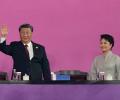
The Olympic Council of Asia (OCA) has dismissed concerns about organisational chaos at the Asian Games, attributing criticisms to attempts to "politicise" the event. Despite widespread issues like accommodation scarcity, lengthy check-ins, and athlete complaints, OCA officials insist challenges are normal and are being handled effectively. They also addressed a diplomatic complaint from South Korea regarding a historical figure at a welcome ceremony and defended cost-saving measures like container-style accommodation.

Organisers of the upcoming Asian Games in Nagoya and the Aichi region are seeking to reduce the number of participants after registrations for athletes and officials significantly exceeded the projected 15,000, raising concerns about accommodation capacity.

Indian athletes are undergoing a unique acclimatisation process at NSNIS Patiala and Bengaluru, spending nights in makeshift shipping container rooms. This initiative by the Sports Authority of India aims to prepare them for the unusual container-style accommodation awaiting them at the upcoming Aichi-Nagoya Asian Games in Japan, ensuring logistical issues do not distract from their performance.

BCCI Vice-President Rajiv Shukla has confirmed that Indian cricketers participating in the upcoming Asian Games in Japan will stay in designated accommodation provided by the Organising Committee, which, while comfortable, will not be five-star hotels due to scarcity in Nagoya. Both BCCI and IOA have addressed the arrangements, ensuring player comfort and suitable facilities.
Olympic Council of Asia Director General Husain Al Musallam defended Japan's decision not to have a dedicated Athletes' Village for the Aichi-Nagoya Games, citing cost and sustainability. This comes amidst criticism over accommodation chaos. Musallam confirmed that future Asian Games in Doha (2030) and Riyadh (2034) will feature dedicated villages, emphasising flexibility and legacy considerations. He also supported the increasing number of athletes, highlighting the importance of sport in current global crises.

Indian athletes at the Asian Games in Nagoya are facing significant accommodation challenges, including cramped rooms on a cruise ship and long waits for check-in. The host nation's athletes are also affected, with complaints about shared rooms and general mismanagement. Organisers have opted against a traditional Athletes Village, leading to athletes travelling long distances for training, further exacerbating the logistical issues ahead of the mega-event.

India's Chef de Mission for the Asian Games, Sahdev Yadav, said that he only learned after arriving in the city that organisers had removed around 30 to 35 Indian athletes from the accommodation list.

India's Asian Games contingent faces accommodation issues at Costa Serena, as athletes report cramped rooms and long delays amid organisational chaos.

Organisers of the Asian Games in Nagoya are actively addressing complaints regarding athlete accommodation, including issues with bed sizes in container huts and cabin sizes on the newly docked cruise ship, Costa Serena, which will house 4,000 participants.
Indian athletes, including wushu and table tennis players, faced initial check-in difficulties upon arrival for the Asian Games in Nagoya. While some wushu players and coaches reportedly had issues with room allocation on the designated cruise ship, officials stated the problems were resolved. The Games' accommodation plan involves a mix of cruise ships, container rooms, and hotels, with some contingents already raising concerns about the quality and availability of lodging.

The Olympic Council of Asia defended the Aichi-Nagoya Asian Games despite accommodation and transport complaints, saying mega multi-sport events always face challenges.

International Olympic Committee (IOC) President Kirsty Coventry and Olympic Council of Asia (OCA) President Sheikh Joaan bin Hamad Al Thani are scheduled to visit the Aichi-Nagoya Asian Games athletes' village on September 20. This visit follows the opening ceremony and will include a tour of the Garden Pier section and interaction with athletes. The Games feature a unique accommodation setup, utilising a cruise liner, temporary villas, and hotels instead of a traditional village. Various logistical and ceremonial details, including team welcome ceremonies and other official meetings, were also discussed.

Organisers of the Aichi-Nagoya Asian Games have defended their decision to forgo an Athletes' Village, opting instead for a mix of hotels, container huts, and a cruise ship, despite complaints about cramped conditions and shared rooms.

The Indian Sports Ministry has sought assistance from the Indian diaspora in Nagoya to help with athlete accommodation at the Asian Games, as several Indian and other athletes have faced delays and issues with their designated lodging due to a lack of a dedicated athletes' village.
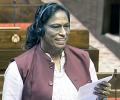
Indian Olympic Association president P T Usha has voiced strong objections to the Aichi-Nagoya Asian Games organisers' decision to forgo a conventional Athletes Village, opting instead for dispersed accommodation including a cruise ship. Usha, a former Asian Games athlete, highlighted the importance of a centralised village for athlete interaction and expressed concerns about logistical challenges and venue distances. She believes the traditional village system will endure despite this experiment and shared her excitement for India's performance and future hosting ambitions.
The traditional flag hoisting ceremony at the Asian Games in Nagoya was delayed and then abruptly halted due to unspecified "trouble," leaving multiple countries, including India, awaiting clarity. This incident adds to growing criticism against organisers for logistical chaos, including complaints about delayed and cramped container-style lodging facilities provided to athletes to cut costs.

The Delhi High Court has urged the Wrestling Federation of India (WFI) to establish clear guidelines and timelines for female athletes returning to competitive sports after maternity leave. The court's observations came during a hearing for grappler Vinesh Phogat, who is seeking permission to participate in selection trials for the 2026 Senior World Championships after her maternity break. Justice Swarana Kanta Sharma highlighted the unfairness faced by women athletes post-childbirth and criticised the WFI's current policies, hinting at the need for a balanced framework.

Accessibility organisation Svayam has partnered with the People's Armwrestling Federation India (PAFI) to ensure adequate facilities and transportation for the upcoming 47th World Armwrestling Championship and 28th World Para Armwrestling Championship in New Delhi. The partnership will focus on accessibility audits, staff sensitisation, and accessible transportation for the event, which will host athletes from 56 countries, including 400 para-athletes.

Indian MMA fighter Varun Sanyal was forced to withdraw from the Asian Games after blacking out during a solo weight-cutting session, citing a lack of support staff. He expressed disappointment but also pride in the team's overall medal performance despite logistical challenges and his late inclusion in the squad.

The Sports Authority of India (SAI) has increased its on-ground support for Indian athletes at the Asian Games in Japan, providing transport for shooters and accommodation for staff, following reports of logistical issues and international criticism against the Organising Committee.

Indian badminton medallist H S Prannoy has strongly criticised the 2026 Asian Games organisers for a 'sad' event experience for athletes and a 'cruel' competition schedule for badminton, citing issues with accommodation and the lack of a dedicated athletes' village.

An Indian delegation, led by Gujarat Deputy Chief Minister Harsh Sanghavi, is undergoing training in Glasgow to learn about staging a multi-sport event. This is part of Ahmedabad's preparations to host the 2030 Commonwealth Games, marking the event's return to India after two decades. The training covers various aspects of Games operations, including venues, transport, accreditation, and athlete accommodation, and includes sports diplomacy sessions.

The Indian men's cricket team is facing kit sizing issues and accommodation concerns ahead of their departure for the Asian Games. While most kit problems are being resolved, the BCCI has proactively arranged its own hotel for the team in Nagoya, Japan, due to reported delays and inadequate facilities for other athletes.

Indian para badminton coach Gaurav Khanna has responded to allegations of deflating player morale at the Asian Para Games. He claims his controversial social media post, which predicted medal counts, was due to his account being hacked. Khanna further alleges that the accusations are a "misleading public narrative" designed to discredit him for raising "documented irregularities" in player selection, including the omission of deserving players and the inclusion of a banned athlete.

The Indian Olympic Association has criticised Hockey India for its failure to release funds for an inquiry committee investigating harassment allegations against HI Secretary General Bholanath Singh. Bholanath has cited a conflict of interest, stating he cannot sign the cheque for the committee, and has asked HI President Dilip Tirkey to do so instead, impeding the probe's start two months after its formation.

Thirteen-year-old Yu Zidi's three golds and MVP award provided a golden highlight as the Aichi-Nagoya Asian Games closed after a fortnight of logistical problems.

India-Pakistan clashes in cricket and hockey drew big audiences at the Aichi-Nagoya Asian Games, helping fuel stronger viewership and a 20% revenue rise.
Indian MMA fighter Varun Sanyal was forced to withdraw from the Asian Games after suffering exhaustion and dehydration during a sauna session while cutting weight. He was declared medically unfit, though another Indian MMA athlete, Suchika Tariyal, secured India's first medal.

Indian Olympic Association president PT Usha announced the institution of two new memorial awards: the Raja Randhir Singh Trophy for the best male athlete and the Jaspal Rana Trophy for the best female athlete at the Asian Games. These awards honour the significant contributions of the late sports administrator Raja Randhir Singh and renowned pistol coach Jaspal Rana to Indian sports. Usha also addressed accommodation concerns for Indian athletes at the upcoming Asian Games in Aichi-Nagoya, Japan.

An independent inquiry committee formed by the Indian Olympic Association to investigate harassment allegations by former women's hockey captain Asuntha Lakra against Hockey India secretary Bholanath Singh has not yet met. The delay, two months after its formation, is reportedly due to Hockey India's failure to release necessary funds for the proceedings, despite directives from its president. Lakra has expressed deep disappointment and appealed to top officials for immediate action.

Para-shooters protesting alleged corruption in the selection process for the Aichi-Nagoya Para Asian Games met Sports Minister Mansukh Mandaviya. They accused the Paralympic Committee of India (PCI) of relaxing norms to include unqualified shooters and sought an inquiry into financial irregularities. The Minister is deliberating a resolution.

The accommodation troubles around the Indian contingent in Nagoya took another bizarre turn, with gymnast Pranati Nayak and her coach Ashok Mishra assigned the same room and forced to wait until the early hours before the issue was sorted.

The OCA has asked India and other national Olympic bodies not to seek late additions to their Asian Games contingents as Japan struggles to accommodate more than 15,000 participants.

The Indian Olympic Association has formed a five-member Games Technical Conduct Committee to oversee the technical aspects and sports programme of the 39th National Games, scheduled for Meghalaya in 2027. The committee, chaired by Sunaina Kumari, will ensure technical compliance and athlete-centred preparation for the event.

Indian leg-spinner Ravi Bishnoi shares his unique experience at the Asian Games, highlighting the distinct feeling of winning medals for India compared to trophies for the BCCI. He also discusses the team's accommodation and travel, and their desire to explore other sports.

LIV Golf is facing an uncertain future, operating under Chapter 11 bankruptcy with significantly reduced funding and prize money. Many prominent players are seeking to leave or have already left, while the PGA Tour and European Tour grapple with how to reintegrate defectors, leading to ongoing tension and debate over player loyalty and the future of professional golf.
